When importers compare outdoor WPC cladding, it is easy to focus on surface color, profile design, and unit price. These points matter, but they do not show the full picture. For long-term exterior use, the full product construction is more important.
This article compares two cladding constructions: ASA-capped PVC-based WPC cladding and PE-capped PE-based WPC cladding. The comparison considers both the protective surface layer and the core, because both affect outdoor performance, weight, installation, heat resistance, expansion, and total purchasing cost.
For distributors, wholesalers, importers, and building material suppliers, the right choice is not simply “ASA or PE.” The better question is which product structure fits your market, climate, application, and after-sales risk.
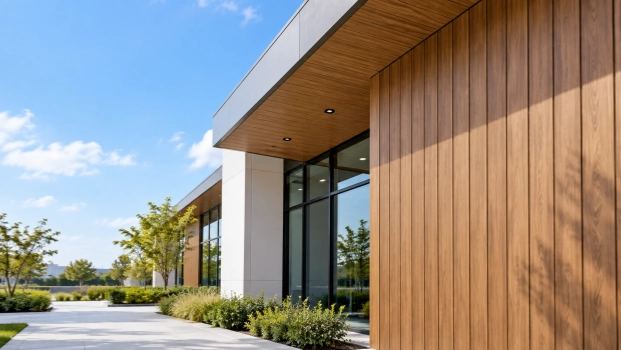
ASA-capped PVC-based WPC cladding and PE-capped PE-based WPC cladding differ in both surface layer and core structure.
UV resistance and color retention should be checked through finished product aging reports, not only material names.
Weight should be compared by effective coverage area, such as kg/m², not only by piece weight or linear meter.
Lighter cladding may improve handling, but it does not always increase container loading area if the shipment is limited by volume.
Wall cladding and soffit installation should be checked separately.
Total cost should include boards, accessories, packing, installation method, loading area, warranty terms, and after-sales risk.
1. What Are the Two Product Constructions?
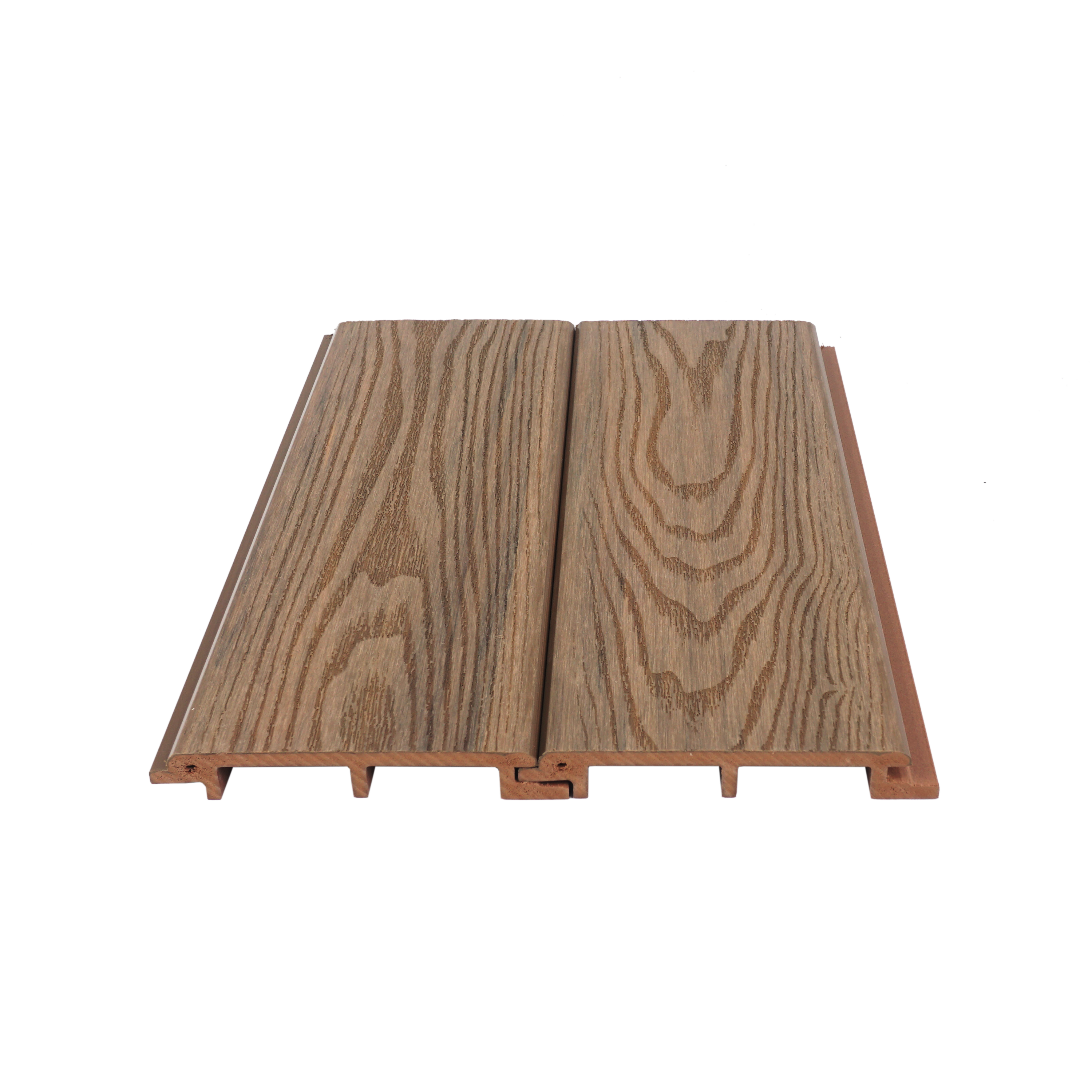
ASA-capped PVC-based WPC cladding uses an ASA protective surface layer over a PVC-based WPC core. ASA, short for Acrylonitrile Styrene Acrylate, is commonly used in outdoor applications because it has strong weather resistance, UV resistance, and color stability.
PE-capped PE-based WPC cladding uses a polyethylene protective surface layer over a PE-based WPC core. This structure is common in many outdoor composite products, especially decking and capped composite profiles.
The difference is not only the surface material. The core material also affects the finished product’s weight, rigidity, temperature behavior, expansion, and installation requirements. This is why importers should compare the full construction instead of comparing only the cap layer name.
| Item | ASA-Capped PVC-Based WPC Cladding | PE-Capped PE-Based WPC Cladding |
|---|---|---|
| Surface layer | ASA cap layer | PE cap layer |
| Core material | PVC-based WPC core | PE-based WPC core |
| Common applications | Exterior walls, soffits, facades, outdoor ceilings | Decking, cladding, general outdoor composite profiles |
| Main comparison points | UV resistance, weight, installation, service temperature | Price, heat suitability, local market acceptance |
2. Surface Aging and Test Reports
Many suppliers describe their cladding as UV resistant, weather resistant, or fade resistant. These claims are useful only when they are connected to clear test information.
For exterior wall cladding, the surface layer is the first part exposed to sunlight, rain, dust, cleaning, and temperature changes. Over time, poor surface stability may lead to fading, chalking, color change, or surface aging.
ASA is generally selected for better outdoor color retention and UV resistance. PE-capped products can also be used outdoors, but PE surfaces may show faster fading or aging under strong UV exposure if the formulation and stabilizer system are not well controlled.
When reviewing aging data, importers should check whether the report is connected to a clear product model, color, test method, testing duration, and mass production formula. A general test report is less useful if it does not match the exact product and color you plan to order.
A color warranty should also be read carefully. A 15-year limited color warranty does not mean zero color change. Outdoor materials naturally face sunlight, rain, dust, cleaning, and temperature change. A controlled level of color change over time is normal, and the acceptable range should be defined in the warranty terms.
3. Cap Layer Thickness and Coverage
Cap layer thickness is another detail that importers should confirm before ordering. The market does not use one fixed cap thickness for every ASA or PE-capped cladding product.
MATECO WPC uses an approx. 0.3 mm ASA cap layer on its exterior WPC cladding. For any supplier, importers should confirm the actual cap thickness, cap coverage, and production consistency.
Coverage is just as important as thickness. Some profiles may look well protected from the front, but importers should also check side edges, grooves, interlocking areas, and deep textured surfaces. This is especially important for fluted wall panels, slat cladding, and interlocking cladding profiles because the visible face is not the only area exposed during installation and long-term use.
A sample cut section can help buyers understand the cap layer structure more clearly. It also helps confirm whether the surface is truly co-extruded or only laminated or coated after production.
4. Weight and Effective Coverage Area
Weight comparison should be based on effective coverage area, not only piece weight or linear meter weight.
A wider panel may look heavier per piece but cover more wall area. A narrow panel may look lighter per piece but require more pieces, more clips, and more installation time for the same wall. For this reason, importers should compare kg/m² based on the actual effective width of each profile.
ASA-capped PVC foamed WPC cladding can be lighter than many PE-based WPC alternatives, depending on profile structure and density. This can help with handling, wall installation, soffit installation, and warehouse movement.
However, lighter weight does not always mean more square meters per container. If container loading is limited by volume, carton size, profile shape, or pallet structure, weight reduction may improve handling but may not increase the total loading area. A useful comparison should include both kg/m² and real container loading data.
5. Installation Requirements for Walls and Soffits
Installation details should be checked before bulk ordering because wall cladding and soffit applications do not always use the same fixing method. A profile that works well on a vertical exterior wall may still need separate confirmation before it is used for outdoor ceilings or overhead areas.
For exterior walls, importers should focus on the fixing system, expansion gap, end gap, substructure, ventilation space, and corner trim solution. These details affect whether the cladding can move properly during temperature changes and whether the finished wall keeps straight, even joints over time.
For soffits and outdoor ceilings, the checking points are slightly different. Buyers should pay more attention to panel weight, maximum fixing spacing, anti-sagging requirements, edge closing methods, and whether the profile is suitable for overhead installation. Because soffit panels are installed above people, fixing stability and long-term shape control are more important than appearance alone.
Interlocking cladding profiles can help create cleaner joints and faster installation, but the system still needs correct fastening details. Importers should ask for separate installation guidance when the same cladding series will be used for both exterior walls and soffits.
6. Temperature, Expansion, and Climate Suitability
Climate suitability should be checked before choosing exterior cladding.
ASA-capped PVC-based WPC cladding is suitable for many outdoor wall and soffit applications when the normal service temperature is below 43°C. In this range, it can provide a good balance of UV resistance, color retention, lightweight handling, and surface stability.
For markets with frequent extreme heat above this range, importers should confirm product suitability carefully. In some very hot regions, PE-based products or aluminum cladding may be more suitable, depending on the application and local installation conditions.
Thermal expansion should also be judged by the finished product, not only by the surface material. Expansion can be affected by core material, profile length, wall thickness, hollow structure, installation direction, fixing method, ventilation, and local temperature range.
This is why installation gaps and fastening rules are part of product performance. Even a good material can fail if it is fixed too tightly or installed without enough expansion allowance.
7. Cracking and Surface Stability
Cracking risk should be judged by finished product performance, not only by the cap material name.
PE-capped products may have a higher risk of fading, surface aging, or cracking under strong UV exposure and thermal cycling if the cap formulation, core structure, and installation method are not well controlled. ASA-capped cladding is often selected when buyers need stronger outdoor surface stability and better color retention, but the final performance still depends on the whole product system.
For large exterior wall areas, surface stability is not only a technical issue. It also affects customer complaints, replacement cost, and local distributor confidence. Importers should pay attention to finished product aging performance, heat and cold cycling behavior, cap layer bonding, profile wall thickness, and installation gap requirements.
8. Full System Cost
It is too simple to say one material is always cheaper or more expensive. Importers should compare the full cladding system cost.
The board price is only one part of the calculation. Accessories, clips, screws, corner trims, substructure, packing method, loading area, installation time, waste rate, and warranty risk can all change the real cost per installed square meter.
PE-capped WPC may have a lower board price in some markets. But if the product has higher fading risk, more accessories, lower loading efficiency, or more after-sales complaints, the final business cost may be different.
ASA-capped PVC WPC cladding may have a higher material cost in some cases, but it can offer stronger UV resistance, better color retention, lighter handling, and better suitability for wall and soffit applications under suitable temperature conditions.
For importers, the most useful comparison is not price per piece. It is cost per installed square meter, combined with market positioning and after-sales risk.
9. Supplier Checklist for Importers
Before placing a bulk order, importers should confirm the key technical and commercial details with each supplier.
| Check Point | Why It Matters |
|---|---|
| Cap material | Confirms whether the surface is ASA or PE |
| Core material | Affects weight, rigidity, expansion, and application |
| Cap thickness | Helps compare surface protection level |
| Cap coverage | Shows whether grooves, sides, and locking areas are protected |
| Aging report | Supports UV and color retention claims |
| Tested model and color | Confirms whether the test matches the ordered product |
| Service temperature range | Helps judge climate suitability |
| kg/m² by effective width | Gives a more accurate weight comparison |
| Container loading area | Shows real shipping efficiency |
| Installation guidance | Reduces risk from incorrect fixing |
| Accessory cost | Affects total system cost |
| Warranty terms | Defines acceptable color change and claim conditions |
| MOQ per design and color | Helps plan inventory and market launch |
10. Final Recommendation
The right comparison is not only ASA vs PE. Importers should compare the full construction: cap layer, core material, profile structure, aging data, installation method, temperature range, loading area, and total system cost.
ASA-capped PVC-based WPC cladding can be a strong option for exterior walls, soffits, commercial facades, villas, apartments, and large-area cladding under suitable temperature conditions. Its advantages mainly come from the ASA surface layer for UV resistance and color retention, plus the PVC foamed WPC core and profile design for lighter wall applications.
PE-capped PE-based WPC cladding may still fit certain markets, especially where higher heat conditions, existing product familiarity, or pricing structure make it more suitable.
For distributors, wholesalers, importers, and building material suppliers, the best choice is the product that matches your climate, application, installation method, and after-sales risk. A professional comparison should always be based on test data, real profile weight, installation details, and full system cost.