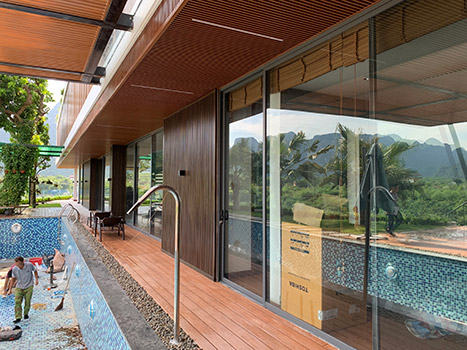
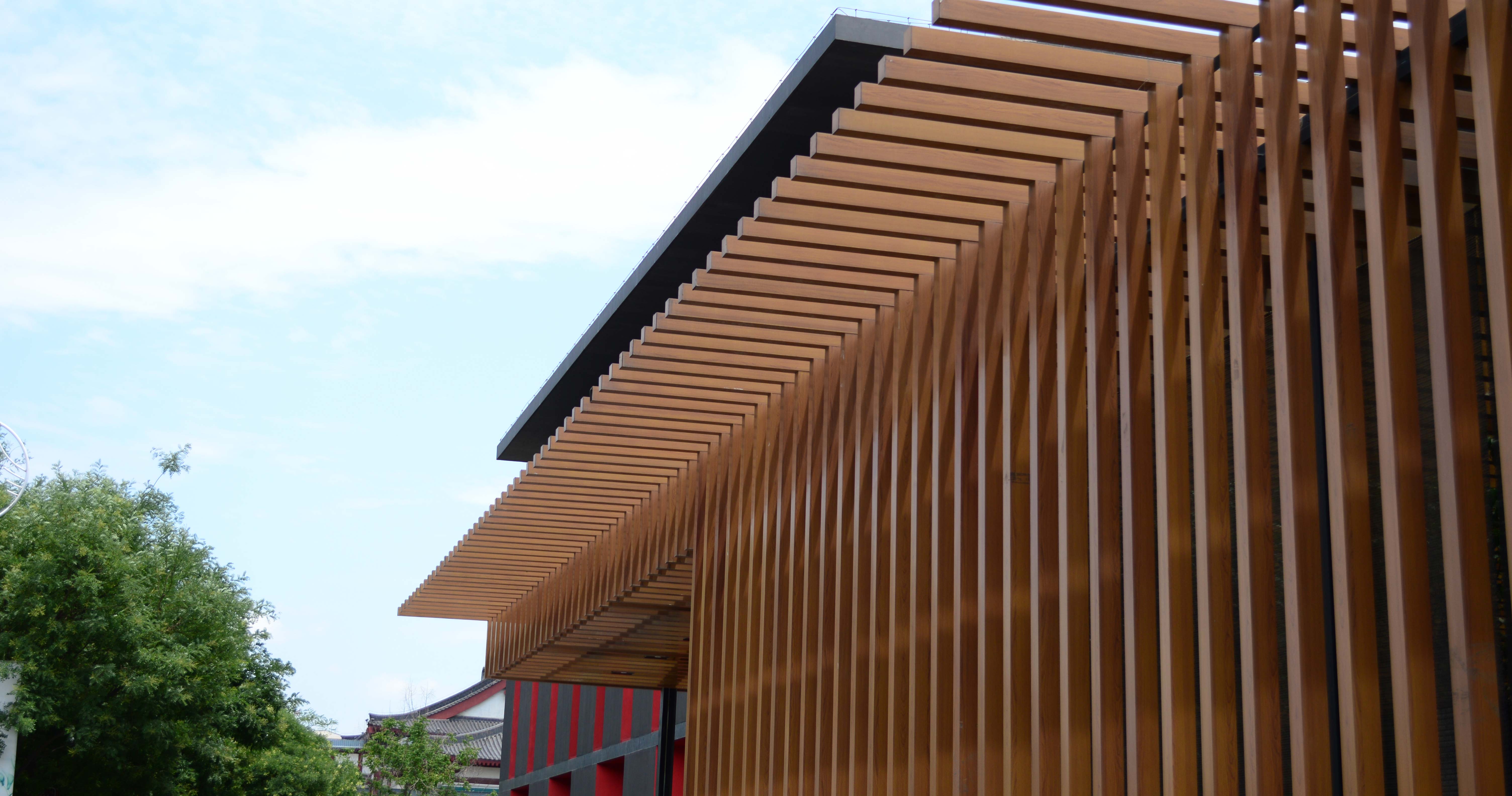
China is a major manufacturing base for composite decking. For wholesalers, distributors, importers, building material suppliers, and private-label buyers, however, importing composite decking is not only about finding the lowest factory price.
You also need to compare product specifications, production consistency, container loading, accessories, quality control, and repeat-order reliability.
A low quotation can become expensive after freight, accessories, inventory problems, or replacement costs are included.
This guide explains what you should check before importing composite decking from China in bulk.
Key Takeaways
Compare specifications, structure, and weight instead of price per square meter alone.
A good sample does not guarantee consistent mass production.
Check whether test reports match the decking model you plan to buy.
Calculate landed cost based on sellable square meters and accessories.
For repeat orders, confirm control of color, profile, surface, and product specifications.
Table of Contents
What to Decide Before Requesting a Quote
A request such as “Please send your best composite decking price” often produces quotations that are difficult to compare.
Before contacting suppliers, define the main requirements:
Target market
Hollow or solid decking
Capped or uncapped surface
Board dimensions and length
Colors and surface texture
Estimated order quantity
Matching clips and joists
Packaging or private-label requirements
Destination port and Incoterm
You do not need every technical detail at the beginning, but a clear RFQ makes supplier quotations easier to compare.
Choosing the Right Composite Decking
Composite decking from China is available in different formulations, structures, and surface systems. These differences affect weight, installation, shipping, and selling price.
PVC-Based vs PE-Based WPC Decking
PVC-based and PE-based WPC can differ in density, stiffness, thermal movement, processing method, and product structure.
However, performance should not be judged by polymer type alone. It also depends on formulation, density, filler content, board geometry, and production control.
Ask suppliers for actual product specifications and test data.
Capped vs Uncapped Decking
Capped decking has a co-extruded protective surface layer.
Depending on the cap material and formulation, it can improve resistance to UV exposure, staining, moisture, and color change.
When comparing capped decking, check the cap coverage, surface consistency, and related test results.
Hollow vs Solid Decking
Solid decking normally uses more material and weighs more per meter.
Hollow decking can improve container efficiency, but two boards with the same outside dimensions may have very different internal structures.
Compare:
Chamber structure
Wall thickness
Weight per meter
Recommended joist spacing
Load test results
How to Compare Composite Decking Quotations
Do not compare quotations only by USD per square meter.
Two suppliers may both quote a 140 × 25 mm hollow decking board, but one board may weigh much more than the other or use a different chamber structure.
Compare the main specifications side by side.
| Item | Supplier A | Supplier B |
|---|---|---|
| Board dimensions | ||
| Board length | ||
| Weight per meter | ||
| Hollow structure | ||
| Wall thickness | ||
| Cap coverage | ||
| Surface finish | ||
| Joist spacing | ||
| Clips required per m² | ||
| Packaging | ||
| MOQ | ||
| FOB price per m² |
Weight per meter is especially useful when comparing boards that look similar.
Also confirm whether clips, joists, screws, trims, and packaging are included in the quotation.
How to Evaluate a Chinese Composite Decking Manufacturer
The key question is not whether a factory can make one good sample. It is whether it can reproduce the same product across repeated orders.
Production Capability
Confirm whether the supplier operates its own extrusion lines and which production stages are completed in-house.
Useful questions include:
How many decking lines are available?
What is the normal monthly output?
Which processes are completed internally?
Formulation Control
Two decking boards can look similar but use different formulations.
Differences may include polymer, wood fiber, filler, recycled material, stabilizers, and other additives.
Ask which product specifications are controlled between production batches.
For long-term purchasing, the more important question is: Can the supplier make the same product again six months or two years later?
Tooling and Quality Control
For customized profiles, clarify mold cost, ownership, maintenance, replacement, and exclusivity.
You should also ask how the factory controls:
Dimensions
Board weight
Surface appearance
Color
Straightness
Cap coverage
Clip fit
Packaging
Batch identification
What to Check on Decking Samples
Samples are useful, but appearance alone is not enough.
Compare measurable information:
| Check | Why It Matters |
|---|---|
| Width and thickness | Confirms dimensions |
| Weight per meter | Helps compare structure and material use |
| Wall thickness | Important for hollow boards |
| Straightness | Affects installation |
| Surface consistency | Helps identify extrusion defects |
| Cap coverage | Important for capped decking |
| Color consistency | Important for large-area supply |
| Clip fit | Confirms system compatibility |
Ask the supplier to identify the product code and specification represented by the sample.
Before shipment, compare randomly selected production boards with the approved sample.
Product Tests and Documents
Do not judge a supplier only by how many certificates appear on its website.
The more important question is whether the test report applies to the product you intend to buy.
Depending on your market, you may need information related to:
Slip resistance
Fire performance
Structural performance
Water absorption
Weathering or UV resistance
Low-temperature performance
Restricted substances
When reviewing a report, check:
Product model
Product description
Test standard
Report date
Laboratory
Test result
Report holder
Determine your market requirements first, then ask the supplier for the relevant documents.
MOQ, Colors, and SKU Planning
MOQ is also an inventory issue.
Too many profiles, colors, and surfaces in the first container can create slow-moving stock.
For example:
3 profiles × 6 colors × 2 surfaces = 36 SKUs
Even in one full container, the stock quantity for each SKU may become too small.
For an initial product range, it is often more practical to concentrate on:
One or two main profiles
Several core colors
One or two surface finishes
Standard accessories
Also confirm whether MOQ applies by profile, color, length, surface, or packaging.
Container Loading and Landed Cost
Do not evaluate shipping only by container weight.
Ask the supplier for:
Boards per package
Packages per container
Linear meters per container
Sellable square meters per container
Gross container weight
Accessory quantities
For distributors, sellable square meters per container is often more useful than tons per container.
A container full of decking is not a complete selling system if there are not enough clips or joists.
Landed Cost Formula
A practical calculation is:
Decking cost
+ accessories
+ packaging
+ ocean freight
+ insurance
+ import duty and taxes
+ port charges
+ inland delivery
÷ sellable square meters
This gives you a better comparison than FOB price alone.
Decking Accessories
Decking should be purchased as a complete system.
Calculate the required quantity of:
Middle clips
Starter clips
Screws
Joists
End trims
Fascia boards
Ask the supplier for recommended accessory consumption per square meter.
It is also useful to keep spare clips and small accessories in stock because replacing them through international shipping can take time.
Pre-Shipment Inspection
A pre-shipment inspection should check finished production goods, not only supplier-prepared samples.
Randomly inspect the shipment for:
Product
Correct profile
Length
Color
Surface
Dimensions
Weight
Straightness
Cap coverage
Quantity
Boards per package
Total packages
Linear meters
Total square meters
Accessories and Packaging
Correct clip and screw quantities
Correct joists and trims
Product labels
SKU information
Batch identification
Private-label packaging if required
Keep photos and inspection records before container loading.
Repeat-Order Consistency
For distributors and wholesalers, repeat-order consistency is often more important than getting the lowest first-order price.
Possible long-term problems include:
Color drift
Different embossing
Different board weight
Internal structure changes
Profile dimensional changes
Different clip fit
For regular SKUs, confirm a reference specification covering:
Product code
Dimensions
Weight tolerance
Color
Surface texture
Board structure
Accessories
Packaging
Batch identification can also help when handling replacements or customer claims.
Warranty and Claims
Clarify claim procedures before placing regular orders.
Ask:
What does the warranty cover?
What is excluded?
What evidence is required?
Is compensation provided as replacement goods or credit?
Is freight covered?
Is installation labor excluded?
Can the production batch be traced?
For distributors, a claim can cost more than the value of the defective boards because it may also involve local delivery, customer service, replacement inventory, and lost business.
Common Import Mistakes
Comparing Price Only
A lower price can result from lower board weight, a different structure, or fewer included accessories.
Compare equivalent products first.
Trusting Samples Too Much
A sample proves that a supplier can make one acceptable board. It does not prove mass-production consistency.
Ordering Too Many SKUs
Too many profiles and colors can create fragmented inventory and slow-moving stock.
Ignoring Accessories
Decking without enough compatible clips or joists may be difficult to sell as a complete system.
Accepting Unrelated Test Reports
Confirm that test documents match the product you are buying.
Leaving Claim Terms Undefined
Agree on warranty and claim procedures before a problem occurs.
Final Import Checklist
Before confirming an order, check that you have:
Defined the profile, dimensions, length, color, and surface.
Compared board weight and structure.
Confirmed quotation terms and Incoterm.
Checked manufacturing and QC capability.
Approved measurable product specifications.
Verified relevant test reports.
Planned practical SKU quantities.
Calculated accessories with decking.
Calculated container loading and landed cost.
Confirmed repeat-order specifications.
Agreed on packaging and labeling.
Defined warranty and claim procedures.
Arranged pre-shipment inspection.
Conclusion
Importing composite decking from China should be treated as a long-term supply decision rather than a one-time low-price purchase.
For wholesalers, distributors, importers, building material suppliers, and private-label buyers, the main risks usually come from specification differences, inconsistent repeat production, unsuitable SKU planning, incomplete accessories, and costs missing from the original quotation.
Define measurable specifications before ordering and compare suppliers using the same criteria.
MATECO has manufactured PVC-based WPC products since 2009 and supplies outdoor co-extruded decking together with matching clips and joist systems.
If you are sourcing composite decking for wholesale distribution or bulk import, MATECO can provide product specifications, samples, container loading information, matching accessories, and OEM options.