Wood plastic composite (WPC) decking is an outdoor decking material made by combining wood-based materials with plastic. Its composition, board structure and manufacturing process all influence its properties and suitability for different applications.
We will explain how Wood Plastic Composite Decking is manufactured, the main types available, key installation considerations and what wholesalers, distributors and building material suppliers should understand when evaluating products for bulk purchasing.
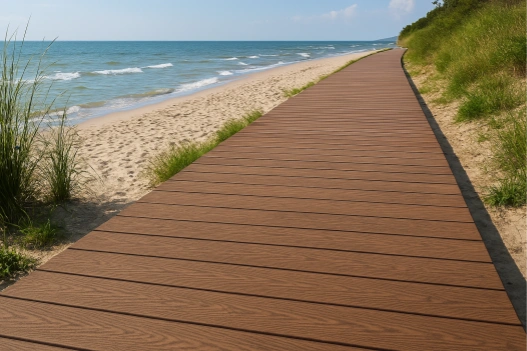
Wood Plastic Composite Decking combines wood-based materials and plastic to create a composite decking product.
Manufacturing processes, material formulations and surface treatments can affect the consistency and performance of WPC decking.
WPC decking is commonly classified by board structure, such as hollow or solid, and surface construction, such as capped or uncapped.
Installation requirements, including joist spacing, fixing methods and expansion gaps, vary by product and manufacturer.
When evaluating Wood Plastic Composite Decking for wholesale or distribution, consider product specifications, manufacturing consistency, installation requirements and available product documentation.
1. What Is Wood Plastic Composite Decking?
Wood plastic composite decking, commonly known as WPC decking, is manufactured by combining wood-based materials with plastic and other formulation components. The mixture is processed into boards with specific profiles, dimensions and surface finishes.
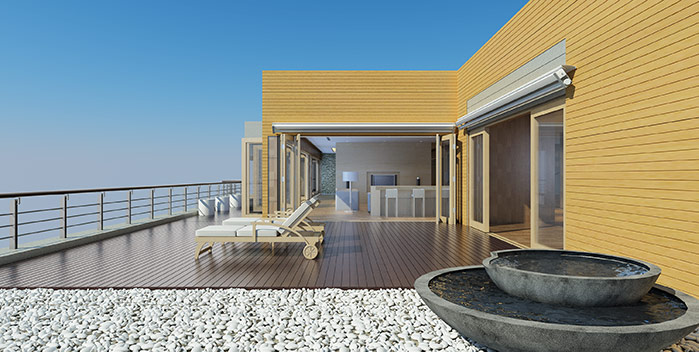
WPC decking is used in outdoor areas such as garden decks, balconies, terraces, walkways and other exterior spaces. Its properties depend on factors including the raw materials, formulation, board structure and manufacturing process.
Not all WPC decking products are the same. Different manufacturers may use different material formulations, production methods and board designs. Understanding these differences is important when comparing products from multiple suppliers.
2. How Is WPC Decking Manufactured?
WPC decking production involves several stages, from raw material preparation to final quality inspection. Each stage contributes to the consistency and characteristics of the finished boards.
Step 1: Raw Material Mixing
Wood-based materials, plastic materials and other formulation components are measured and mixed according to the production requirements. Consistent mixing helps distribute the materials throughout the batch before further processing.
Step 2: Pellet Process
The mixed raw materials go through a pelletizing process to produce pellets for the next manufacturing stage. Pellet preparation helps make the material suitable for feeding into the extrusion equipment.
Step 3: Adding Pellets into the Extrusion Machine
The prepared pellets are fed into the extrusion machine, where they are heated and processed. The material is then prepared for forming into the required decking profile.
Step 4: Co-Extrusion Process
In co-extrusion, the core material and an outer layer are formed together during extrusion. This creates a board with a distinct surface layer surrounding the core.
The structure and coverage of the outer layer depend on the product design and manufacturing specifications. When comparing co-extruded decking, it is useful to check the outer-layer material, coverage and bonding with the core.
Step 5: Surface Treatment and Finishing
After extrusion, the boards undergo surface treatment and finishing according to the intended product design. These processes determine the final surface appearance and texture.
Step 6: Post-Production Oven Treatment
After extrusion and surface finishing, the decking boards undergo oven treatment to improve dimensional stability and reduce the risk of significant changes when exposed to heat later.
This process serves several purposes:
Relieving internal residual stress: Helps reduce stress retained within the material during manufacturing.
Reducing warping and shrinkage: Helps minimize dimensional changes after installation when the boards are exposed to heat.
Improving crystallinity and strength: Supports the development of the material's crystalline structure and contributes to its mechanical properties.
Removing residual moisture and volatile substances: Helps eliminate remaining moisture or volatile components from the material.
This treatment is an important part of post-production processing, helping improve the dimensional stability and consistency of the finished WPC decking boards.
Step 7: Quality Inspection
The finished boards are inspected before packaging. Common inspection points include dimensions, profile consistency, surface appearance and other product-specific quality requirements.
Quality inspection helps identify production inconsistencies and ensures that finished products are checked against the manufacturer's specifications.
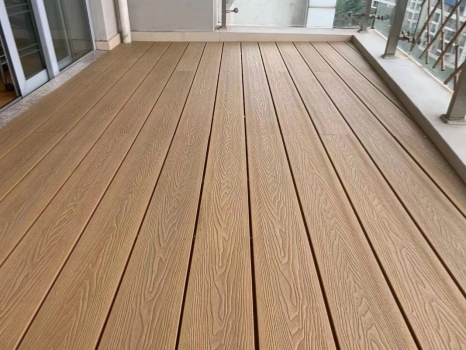
3. Types of Wood Plastic Composite Decking: Hollow, Solid, Capped and Uncapped
WPC decking can be classified in different ways. Two common distinctions are the internal board structure and whether the board has a protective outer layer.
Hollow WPC Decking
Hollow WPC decking has internal cavities running through the board profile. The cavity design and wall thickness vary between products. When comparing hollow boards, check the profile structure, dimensions and manufacturer's load or installation specifications.
Solid WPC Decking
Solid WPC decking has a more filled internal structure rather than continuous hollow cavities. Its weight and material usage may differ from hollow profiles. Product specifications should be reviewed when comparing board weight, handling and installation requirements.
Capped WPC Decking
Capped WPC decking has an additional outer layer formed around the core. This layer is designed as part of the board's surface construction. The material, coverage and bonding of the cap can vary by manufacturer.
Uncapped WPC Decking
Uncapped WPC decking does not have the additional co-extruded outer layer. Its exposed surface is formed from the core material itself. Product maintenance and performance characteristics depend on the formulation and surface treatment.
These classifications describe different aspects of board construction. A product can be both hollow and capped, or solid and uncapped, depending on its design.
4. WPC Decking Installation: Key Requirements
Correct installation is important for the performance of WPC decking. Requirements can vary according to board structure, material formulation, climate and the manufacturer's installation instructions.
Joist Spacing
Joists support the decking boards and help distribute loads across the substructure. The recommended spacing should be based on the decking manufacturer's specifications and the intended application.
For example, MATECO's co-extruded WPC decking installation guide recommends a joist spacing of 30–35 cm for the products covered by its guide. This measurement should not be treated as a universal requirement for all WPC decking.
Expansion Gaps
WPC decking can experience dimensional changes as temperature changes. Appropriate gaps between boards and at board ends allow for the movement specified by the manufacturer.
MATECO's guide specifies a 3 mm gap between boards for the products covered in its instructions. Always refer to the relevant product guide for the required spacing.
Board-End Support
Where two decking boards meet end to end, each board end needs appropriate support. MATECO's guide recommends using two separate joists at board connections, with a 60 mm gap between the two joists.
Fixing Methods
Fixing methods depend on the type of substructure and the fastening system specified by the manufacturer. For example, MATECO's guide specifies expansion screws for wooden joists and M3 × 16 screws for metal joists.
These figures are examples from MATECO's product-specific installation instructions. They should not replace the installation manual supplied with another WPC decking product.
Refer to the MATECO WPC Decking Installation Guide for its full installation details.
5. WPC Decking vs Traditional Wood Decking
WPC decking and traditional wood decking differ in material composition, manufacturing and maintenance requirements. The right option depends on the intended application, operating conditions and product specifications.
Material Composition
Traditional wood decking is made from natural timber, while WPC decking combines wood-based materials with plastic. This difference affects how each material is manufactured, processed and maintained.
Appearance and Consistency
Natural wood has variations in grain, color and texture. WPC decking is manufactured to defined product specifications, allowing manufacturers to produce boards with more consistent profiles and surface finishes within a production range.
Maintenance Requirements
Natural wood may require periodic treatments depending on the wood species and exposure conditions. WPC decking has different maintenance requirements, which vary by formulation and surface construction. Cleaning and care instructions should always follow the manufacturer's recommendations.
Product Specifications
When comparing the two materials, consider more than the initial purchase price. Board dimensions, installation requirements, expected maintenance, material specifications and the conditions of use all affect the suitability of a decking product.
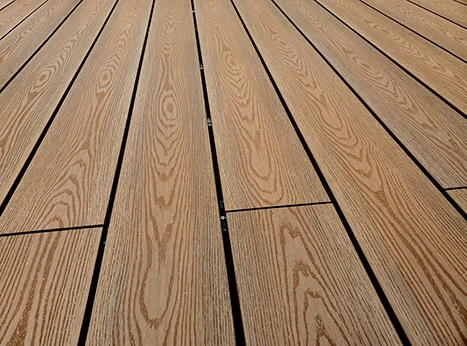
6. How to Choose WPC Decking Products
For wholesalers, distributors, importers and building material suppliers, evaluating WPC decking involves more than comparing product appearance or unit price. The following factors can help structure supplier and product assessments.
Material and Product Specifications
Review the material description, board dimensions, profile structure, surface construction and available technical data. Make sure the specifications are clearly documented and consistent across product batches.
Manufacturing Process
Understanding the production process can help assess how a manufacturer manages raw materials, extrusion, surface finishing and quality inspection. Ask suppliers how production consistency is monitored.
Product Range
Consider whether the supplier offers product options that match your market requirements. Relevant differences may include hollow or solid profiles, capped or uncapped construction, board dimensions and surface finishes.
Installation Documentation
Clear installation instructions are important for distributors and building material suppliers supporting downstream customers. Check whether the manufacturer provides guidance on joist spacing, fastening systems, expansion gaps and substructure requirements.
Quality Control and Supply Consistency
For bulk orders, product consistency across production batches is an important consideration. Discuss the manufacturer's inspection procedures, quality standards, packaging requirements and production capacity before placing orders.
Technical Support and Documentation
Check what product documentation is available, such as technical data sheets, installation manuals, maintenance instructions and warranty terms. Clear documentation helps distributors communicate product requirements accurately across their sales channels.
7. Frequently Asked Questions
What does WPC stand for?
WPC stands for wood plastic composite. It refers to a material made by combining wood-based materials with plastic.
What is the difference between capped and uncapped WPC decking?
Capped WPC decking has an additional outer layer formed around the core during manufacturing. Uncapped WPC decking does not have this additional co-extruded layer.
What is the difference between hollow and solid WPC decking?
Hollow decking contains internal cavities within the board profile, while solid decking has a more filled internal structure. Their weight, material usage and installation requirements may differ.
Does WPC decking expand and contract?
WPC decking can undergo dimensional changes in response to temperature. The amount of movement depends on the material formulation, board design and environmental conditions. Installation gaps should follow the manufacturer's instructions.
How should WPC decking be maintained?
Maintenance requirements vary by product. In general, follow the manufacturer's cleaning and care instructions, and use cleaning methods and products approved for the specific decking surface.
What should distributors check before buying WPC decking in bulk?
Distributors should review product specifications, manufacturing consistency, quality control procedures, installation documentation, packaging and supply capacity. It is also useful to confirm the availability of technical documents and warranty terms.
Conclusion
WPC decking products can differ significantly in material formulation, board structure, surface construction and manufacturing process. Understanding these factors makes it easier to compare products and assess their suitability for different markets.
For wholesalers, distributors, importers and building material suppliers, a thorough review of product specifications, quality control and installation documentation is an important part of selecting a WPC decking manufacturer.