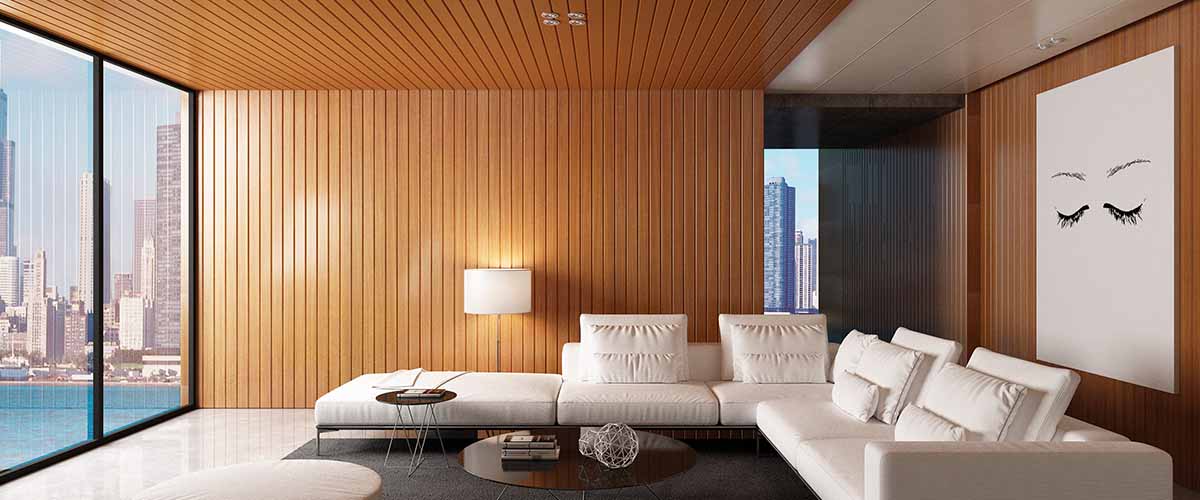
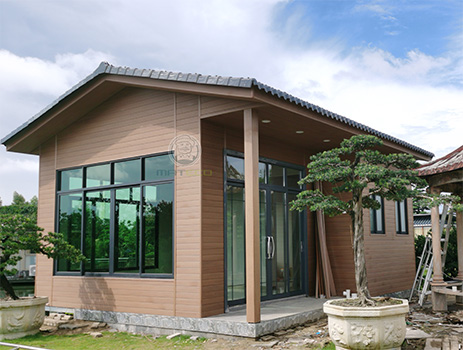
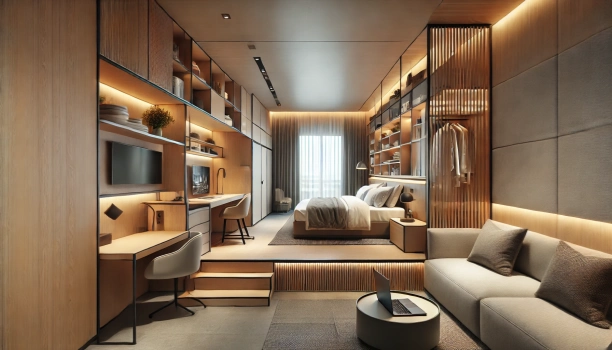
PVC wall panels are widely used for bathrooms, kitchens, commercial interiors, and renovation work because they are moisture-resistant, lightweight, easy to clean, and relatively simple to install.
However, PVC wall panels also have limitations. Their performance depends on panel thickness, formulation, structure, surface treatment, installation, and exposure conditions. Heat sensitivity, thermal expansion, impact resistance, acoustic performance, and fire classification should all be considered before choosing a product.
Key Takeaways
PVC wall panels are moisture-resistant, lightweight, and easy to maintain.
Product quality varies according to formulation, thickness, structure, and manufacturing control.
Common limitations include thermal expansion, heat sensitivity, and limited acoustic performance.
Fire performance should be checked according to the specific product's test report or classification.
Table of Contents
Advantages of PVC Wall Panels
1. Moisture Resistance
PVC does not readily absorb water, making PVC wall panels suitable for humid areas such as bathrooms, kitchens, and utility spaces.
However, the performance of the complete wall system also depends on joints, trims, substrate condition, and installation quality.
2. Lower Cost
PVC wall panels can cost less than ceramic tile, stone, or natural wood, depending on the product and local market.
Their lightweight structure and interlocking designs can also reduce handling and installation work.
3. Low Maintenance and Easy Cleaning
PVC panels normally require little routine maintenance. Their surfaces can usually be cleaned with a soft cloth and suitable cleaning products, and repainting is generally not required.
4. Lightweight and Easy to Install
Compared with tile, stone, and many rigid wall materials, PVC panels are relatively light.
Tongue-and-groove or interlocking profiles can make installation faster, although correct fixing and expansion allowance are still important.
5. Different Surface Options
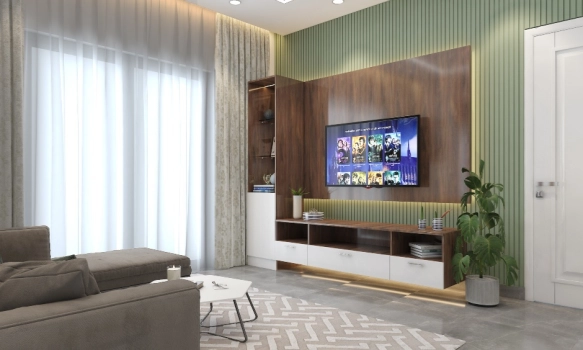
PVC wall panels are available in wood grain, stone patterns, solid colors, embossed textures, matte finishes, and other surface designs.
Surface quality can vary significantly between products, especially in printing, embossing, gloss, and color consistency.
Disadvantages of PVC Wall Panels
1. Heat Sensitivity and Thermal Expansion
PVC expands and contracts as temperature changes.
If sufficient movement allowance is not provided, long panels may develop joint movement, buckling, or deformation.
The actual amount of movement depends on panel length, temperature range, structure, and installation method.
2. Fire Performance Varies
Not all PVC wall panels have the same fire performance.
Formulation, additives, panel thickness, structure, and surface materials can all affect fire behavior. Buyers should therefore check the fire test report or classification of the specific product rather than relying only on general claims about PVC.
MATECO WPC indoor PVC-based WPC products use the same raw material system across the indoor series and have a B1 fire classification according to GB 8624-2012. Buyers should still confirm whether this classification meets the regulations or project requirements of the destination market. The B1 classification under GB 8624-2012 should not be presented as equivalent to a classification under ASTM or EN standards.
3. Lower Impact Resistance
Thin or hollow PVC wall panels may be more susceptible to dents or local deformation than materials such as tile, stone, or dense boards.
Impact resistance depends strongly on wall thickness, rib structure, density, and formulation.
4. Limited Sound Insulation
A thin PVC panel alone should not be treated as a sound-insulation system.
Acoustic performance depends on the complete wall structure, including backing material, cavity, insulation, and substrate.
5. Surface Quality Can Affect Appearance
Lower-quality PVC panels may have obvious pattern repetition, excessive gloss, or shallow surface texture.
Higher-quality printing, embossing, and surface treatment can provide a more natural appearance.
Why PVC Wall Panel Quality Can Vary
Two products sold as PVC wall panels can perform very differently.
Important manufacturing factors include:
PVC formulation
Mineral filler level
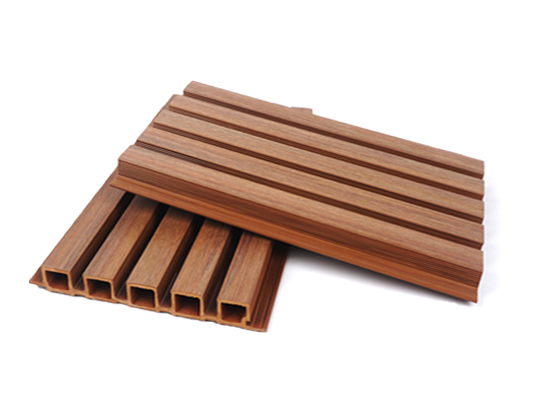
Panel wall thickness
Internal rib structure
Material density
Surface treatment
Extrusion control
Dimensional tolerance
For example, mineral filler can influence rigidity, weight, impact performance, and processing behavior. The final result depends on the complete formulation rather than one raw material alone.
From MATECO WPC manufacturing experience, PVC-based WPC is not designed simply by maximizing the wood fiber content. Increasing the wood fiber level may reduce part of the raw material cost, but it can also create challenges in extrusion stability, plasticization, material dispersion, and surface quality. PVC-based WPC therefore requires a controlled balance between PVC resin, wood fiber, additives, and processing conditions.
As a general reference, a PVC-based WPC formulation may contain approximately 60% PVC, 20% wood fiber, and 20% chemical additives. These percentages are not a fixed MATECO WPC formulation. The appropriate balance depends on the panel structure, processing requirements, and intended application.
For this reason, buyers should not compare PVC wall panels only by price.
How Long Do PVC Panels Last?
There is no single lifespan that applies to every PVC wall panel.
Service life depends on:
Indoor or outdoor use
UV exposure
Temperature
Product formulation
Surface treatment
Installation quality
Mechanical impact
For commercial purchasing, warranty conditions, test results, and actual application history are more useful than relying on a general lifespan figure.
Does PVC Weaken Over Time?
PVC properties can change after long-term exposure to UV light, heat, chemicals, or repeated mechanical stress.
Outdoor exposure can cause discoloration or changes in mechanical properties if the product does not have suitable UV protection.
High temperatures may also accelerate material aging. Correct formulation and installation can reduce these risks.
When Are PVC Wall Panels a Good Choice?
PVC wall panels are suitable when you need:
Moisture resistance
Easy cleaning
Low maintenance
Lightweight materials
Fast installation
Cost control
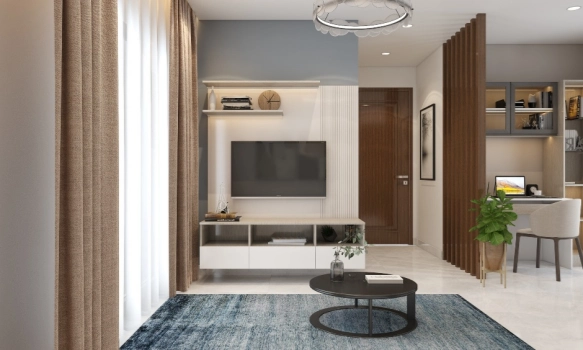
MATECO indoor PVC-based WPC wall panels are used for commercial interior applications such as hotels, offices, restaurants, shopping malls, and other interior decoration projects.
Other materials may be more appropriate for areas exposed to high heat, heavy impact, strict acoustic requirements, or specific fire regulations that the selected PVC panel cannot meet.
What Bulk Buyers Should Check
For wholesalers, distributors, importers, and building material suppliers, check more than appearance and unit price.
Important specifications include:
Panel dimensions and tolerances
Wall thickness and weight
Internal structure
Surface and color consistency
Required test reports
Packing and loading quantity
MOQ and repeat-order consistency
These factors help buyers compare products more accurately before placing a bulk order.
For product selection, compare MATECO interior WPC wall panels and MATECO outdoor WPC wall cladding according to the intended application.
Conclusion
PVC wall panels offer practical benefits such as moisture resistance, low maintenance, lightweight construction, and easy installation.
Their main limitations include heat sensitivity, thermal expansion, impact resistance, acoustic performance, and product-specific fire behavior.
Because PVC wall panels can vary significantly in formulation, structure, and manufacturing quality, buyers should compare actual specifications and test information rather than judging products only by appearance or price.