Is WPC Decking Any Good?
It's a smart question—because decking is not decoration. It is a high-wear structural surface that people walk on every day. It faces sun, rain, moisture, and temperature swings, so it must stay safe, stable, and consistent for years—especially in contractor and project supply.
The short answer: yes. WPC decking can be an excellent choice, and many professional buyers now prefer it over timber.
However, for B2B buyers, the real answer is more specific: WPC decking is only "good"when the profile structure, formulation, and factory consistency match the application. Low-grade composite decking can lead to fading, sagging, scratches, and complaints.
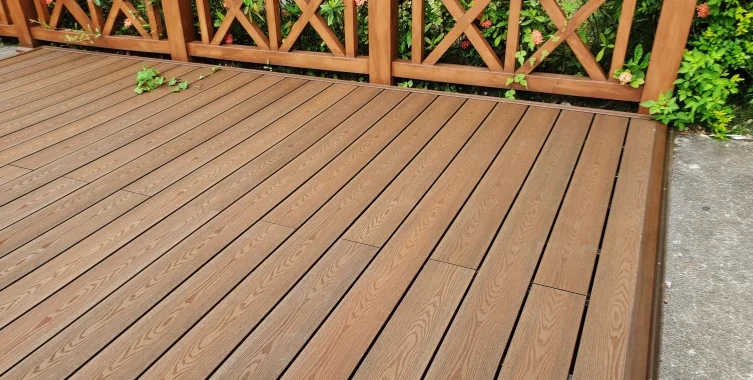
Table of Contents
What WPC Decking Actually Is
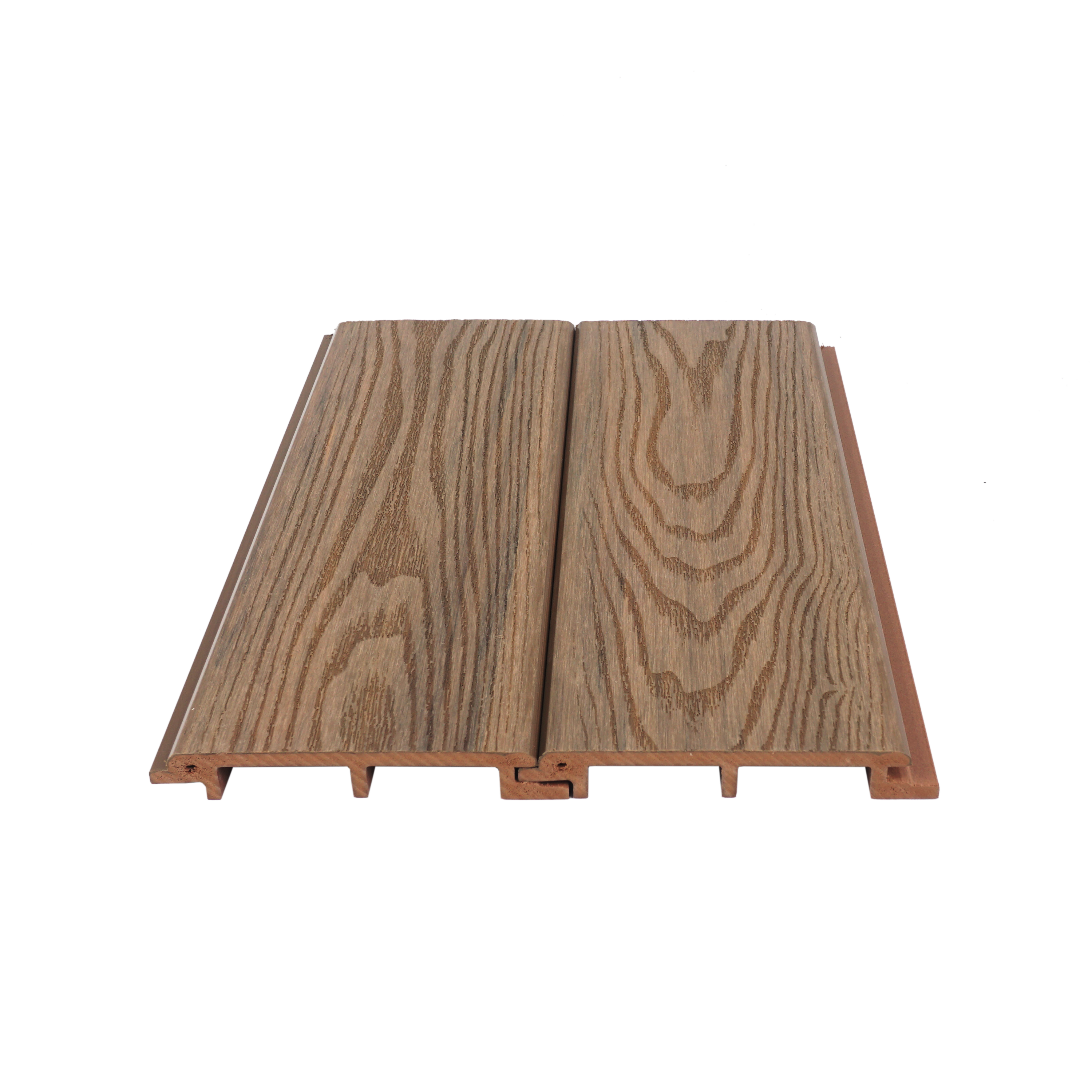
WPC decking is an extruded decking profile made from a blended composite material—typically plastic combined with reinforcing fillers such as wood fiber. In other words, it is not a surface coating and not a paint layer. It is not a thin decorative skin glued onto a board. Instead, it is a complete decking board system, produced by extrusion, designed to work with a sub-structure such as joists and clips. Once installed, the decking becomes the working surface that must handle long-term outdoor exposure.
This matters because WPC decking behaves differently from wood. Timber boards are "natural" and contain natural fibers; they expand, contract, crack, warp, and rot depending on moisture and climate. WPC decking is engineered to solve these issues using plastic stability and controlled extrusion structure. That's why you see composite decking growing fast in modern construction supply chains: it is standardized, scalable, consistent, and easier for contractors to install repeatedly across large-area projects.
What Makes Decking “Good” in Real Projects
A deck board can look great on Day 1 and still become a problem after one rainy season or one summer. So when you evaluate whether WPC decking is any good, you should judge it using practical performance indicators—things that reduce your risk as a supplier, distributor, or contractor.
A "good" WPC deck should perform in at least four ways:
1)It should offer low maintenance, meaning your customers are not forced to sand, repaint, or oil it every year.
2)It should be rot-proof and termite resistant, especially for humid or tropical regions where timber decks fail quickly.
3)It should have stable color and surface appearance, meaning it does not fade, chalk, or develop uneven discoloration that creates customer dissatisfaction.
4)And most importantly, it must be structurally reliable, meaning it will not sag, deform, or crack under real loading conditions when installed correctly.
If your deck board supports these needs, then in real-world construction terms, yes—WPC decking is a very good product category.
Why WPC Decking Has Become a Preferred Choice in the B2B?
One major reason WPC decking is considered good is because it reduces long-term operating costs and reduces unpredictable performance issues that come with natural timber. This is extremely important for contractors and wholesalers. Contractors want materials that install fast, perform predictably, and reduce warranty risks. Wholesalers want products that have stable specifications, stable batch control, and stable repeat ordering. And project owners—hotels, resort developers, residential developers—want outdoor surfaces that look premium without creating a maintenance burden every year.
WPC decking fits this need well because it is designed for long-term outdoor performance. It does not rot like timber. It does not splinter easily, which is a major safety issue in barefoot walking areas like pools, parks, or patios. It provides consistent length, thickness, and cross-section because it is extruded in a controlled industrial system. This standardization is exactly what makes WPC supply chains attractive for global distribution.
In many countries today, builders no longer want to recommend traditional wood decks for large projects unless the budget is very high. They prefer composite systems that are easier to manage and easier to guarantee.
Why Some People Say WPC Decking Is "Bad"
If WPC decking is good, why do some people complain? In most cases, the problem is not WPC as a concept—it is low-grade WPC product quality or wrong application selection. Because WPC is a formulation-driven category, different factories use different material systems, different fillers, different stabilizer packages, different density targets, and different surface technology. Two products can both be called "WPC decking" and perform completely differently after one year outdoors.
There are four common complaint areas: fading/chalking, heat, sagging, and scratching. These are real issues, but they are also predictable and avoidable when you specify correctly. For B2B buyers, your job is not to avoid WPC decking altogether. Your job is to choose the correct WPC category and supplier level for your project types.
Issue #1: Fading and Chalking
If you have heard complaints like "composite decking fades quickly," you should know exactly where that comes from: uncapped or low-UV composite surfaces. Outdoor UV exposure is brutal. If the surface formulation is not strong enough—especially in tropical or high-UV regions—the board color will fade, and the surface may form a chalk-like appearance over time. This problem happens far more in cheaper “first generation” decking because the exposure layer is the same as the structural core.
In many modern supply chains, the solution is already standard: use capped / co-extruded decking. This means the board is produced with a protective cap layer (often ASA or high-performance polymer) co-extruded over the core. This cap layer works as a shield against UV radiation, staining, and weathering. In practical B2B terms, capped decking gives you more confident project outcomes, fewer after-sales complaints, and an easier story to sell to distributors and contractors.
If you target commercial projects, hotels, resorts, and high-volume wholesalers, this upgrade is not optional.
Issue #2: Surface Heat in Strong Sunlight
Another concern you may hear is: "WPC decking gets too hot." This is partly true, but it needs correct context. Any outdoor surface—including timber, stone, tile, and PVC—gets hot in direct sunlight. The temperature depends heavily on color and material thermal properties. Dark colors will always get hotter than light colors. It's simple physics.
However, in WPC decking, especially dark brown or charcoal colors, heat can become noticeable in barefoot areas. That doesn't mean WPC is "bad." It simply means you should specify correctly for the project environment. If the deck is for pool surrounds, rooftop patios, or areas with frequent barefoot traffic, you should prioritize lighter colors, textured surfaces, or ventilation design beneath the deck. You can also improve the perceived comfort through installation design: leaving correct air gaps, avoiding direct contact with cement bases, and using proper sub-frame spacing for airflow.
If you handle some projects, the right strategy is not to reject composite decking because of heat. The right strategy is to offer correct product-color guidance, so your contractors and end customers feel that you are professional and reliable.
Issue #3: Sagging or "Bouncing"
Sagging is one of the biggest risks when you buy low-end decking, and it is one of the most misunderstood issues. Many people assume "WPC is weak," but in reality, most sagging issues come from wrong joist spacing, weak profile design, or low density formula. In other words, it is not the category that fails—it is the combination of product design and installation.
As a wholesaler or contractor, you should evaluate WPC decking like any engineered building product. You should ask: what is the board wall thickness and recommended joist spacing? Quality suppliers can provide installation guidance. If you install a budget board at wide spacing (like timber), it may flex or sag under load.
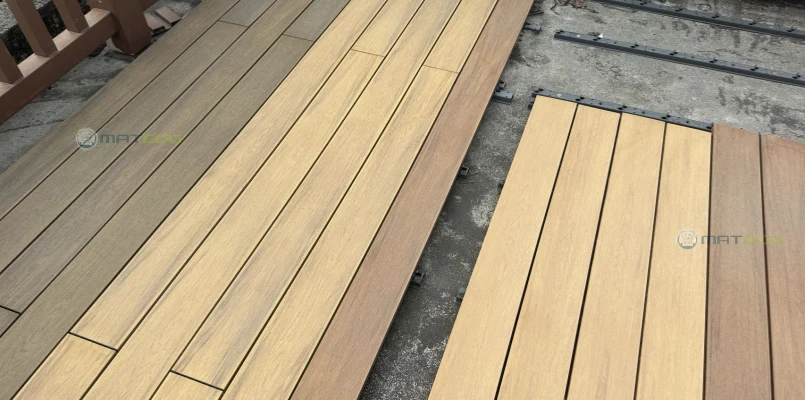
If you want to confidently sell WPC decking as "good,"then you should operate like a system supplier: you sell the correct board + correct clip system + correct joist spacing recommendation. Once the deck is installed as a controlled system, structural performance becomes stable and predictable.
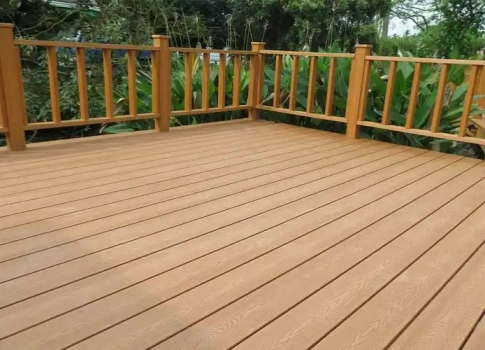
Issue #4: Scratches and Surface Wear
Scratching is another common complaint. You should be realistic: WPC decking is not ceramic tile. Dragging furniture or rough objects can leave marks, especially on uncapped decking surfaces. But again, this is not a reason to reject WPC decking as a category. It is a reason to specify the correct surface technology and texture design.
Capped decking generally improves scratch and stain resistance because the cap layer is engineered for surface durability. In addition, deep-embossed wood grain textures help hide small marks and maintain a premium look over time. For wholesale buyers, the key is managing customer expectations correctly.
You should position WPC decking as a "low maintenance outdoor surface," not as an "indestructible industrial floor." When sold professionally, it performs extremely well in residential, commercial, and hospitality projects.
Is WPC Decking Better Than Wood?
In most outdoor cases, yes, WPC decking is better than wood, mainly because it is more predictable and less maintenance-heavy.
Timber decks can look beautiful, but they demand ongoing cost and labor. Many wood decks require oiling, repainting, sanding, and re-treatment. They can warp and crack. They can rot from moisture exposure. They can splinter, which becomes a safety issue. In contrast, WPC decking is designed to stay stable for years with minimal maintenance, while still delivering a wood-like appearance.
For builders and distributors, what matters is not only appearance—it is total cost of ownership. If a project owner spends less time and money maintaining a deck, that is value. That is why WPC decking has become a mainstream alternative in the modern building-materials market.
Conclusion
WPC decking is a solid choice when it is specified and supplied correctly. For large projects, it offers stable performance, low maintenance, and consistent quality that timber often cannot provide. Most problems linked to composite decking come from low-grade products or incorrect installation, not from the material itself. When you choose the right profile, formulation, and supplier, WPC decking performs reliably and reduces long-term risk for contractors, distributors, and project owners.
If you are looking for a WPC manufacturer, MATECO will be your best choice.
WhatsApp: +86-13380085620
Email: info@matecowpc.com