Composite Decking Colors: A Guide to Choosing the Right Color
Choosing the right composite decking colors is one of the most important decisions when planning an outdoor deck. Color affects how the decking works with the house exterior, surrounding materials, furniture, landscape, and the overall appearance of the space.
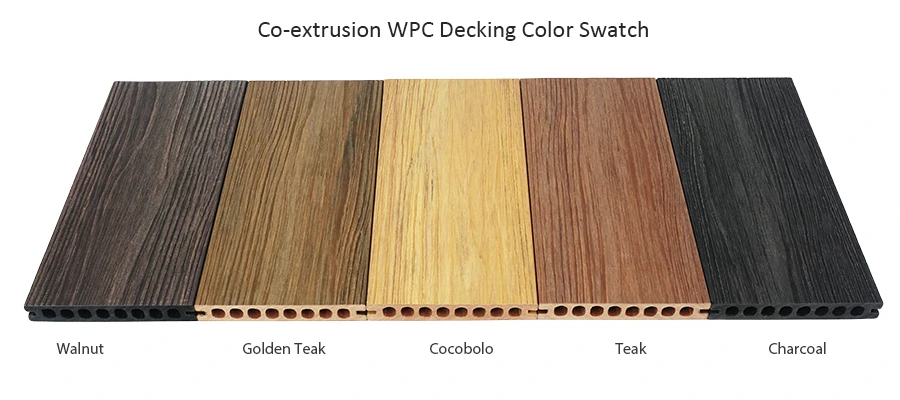
Popular composite decking colors range from natural wood tones such as teak, golden teak, walnut, and cocobolo to cooler options such as gray and charcoal. Each color creates a different look, and the best choice depends on the building style, sunlight, surrounding finishes, and the effect you want to create.
This composite decking color guide compares the main color families, explains warm and cool tones, looks at fading and UV exposure, and shows how to match decking colors with different house styles. It also includes practical guidance for distributors and importers selecting a core color range for bulk orders.
Key Takeaways
Teak, golden teak, walnut, and cocobolo are warm composite decking colors that pair well with beige, cream, brick, and natural stone.
Gray and charcoal are cooler options that work well with white walls, concrete, glass, metal, and contemporary architecture.
Light and dark decking colors behave differently in strong sunlight, so heat absorption and UV exposure should be considered.
Color should be matched with actual exterior materials rather than selected from a screen image alone.
For wholesalers, distributors, and importers, a compact range of light, medium, dark, warm, and cool colors can simplify inventory planning.
Table of Contents
Composite Decking Colors at a Glance
Different colors work better with different building styles and surrounding materials. The table below gives a quick comparison of the main decking colors.
| Composite Decking Color | Tone | Best Matched With | Overall Appearance |
|---|---|---|---|
| Golden Teak | Warm | White, cream, beige, light stone | Light natural wood appearance |
| Teak | Warm | Beige, cream, white, warm stone | Balanced medium wood tone |
| Gray | Cool / Neutral | White, black, concrete, glass, metal | Clean contemporary look |
| Cocobolo | Warm | Neutral walls, greenery, stone | Rich wood tone |
| Walnut | Warm / Dark | Cream, brick, stone, dark trim | Deep traditional wood tone |
| Charcoal | Cool / Dark | White walls, glass, concrete, metal | Strong modern contrast |
This type of comparison is especially useful when distributors or importers need to select a manageable color range instead of stocking too many similar shades.
Teak Composite Decking
Teak, with its rich brown wood tone, has long been a popular decking color because of its natural warmth. Composite decking in teak tones reproduces the appearance of traditional timber while requiring less routine maintenance than natural wood.
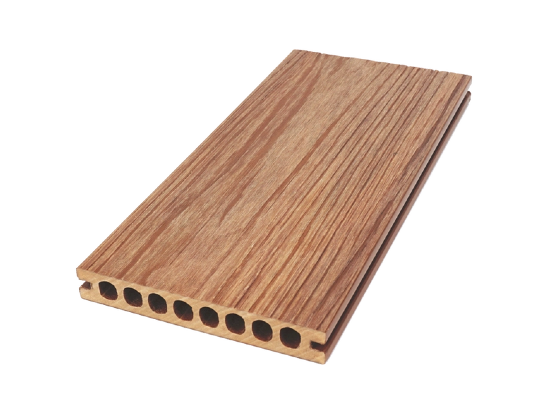
Teak is relatively easy to match with different building styles. It can work with contemporary buildings as well as more traditional houses.
Its warm undertone pairs particularly well with beige, cream, off-white, natural stone, and other warm exterior finishes.
The Modern Appeal of Gray Composite Decking
Gray composite decking has become a popular choice for modern outdoor spaces because it works well with neutral architectural materials. It can create a clean transition between decking, concrete, metal, glass, and light-colored exterior walls.
Light and medium gray tones tend to create a softer appearance, while deeper gray shades produce stronger contrast. Gray decking also works well with black window frames, metal railings, white facades, and contemporary furniture.
MATECO's outdoor color range includes several gray-based options such as Moon Grey, Dolphin Grey, and Space Grey, giving buyers more than one gray direction to compare when building a color range.
Cocobolo Wood Tones in Decking
Cocobolo provides a richer wood appearance with variations of brown and reddish wood tones.
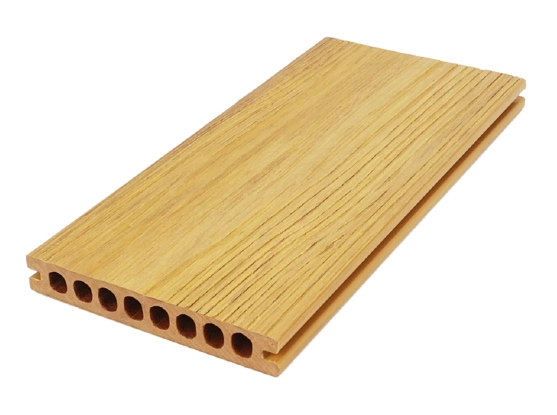
It works well where buyers want a more noticeable natural wood effect without selecting a very dark decking color.
Cocobolo can be paired with greenery, neutral exterior walls, stone finishes, and warm-colored outdoor furniture. It sits between lighter golden teak tones and deeper walnut colors, which makes it a flexible option in a decking color range.
The Appeal of Charcoal and Walnut
Charcoal and walnut sit at the darker end of the composite decking color range, but they create very different effects.
Charcoal has a cool undertone and works particularly well with modern buildings using white walls, glass, concrete, or dark metal details.
Walnut has a warmer brown tone. It is closer to the appearance of traditional dark timber and works well with cream walls, brick, stone, and other warm exterior materials.
Choose charcoal when the building uses cool, neutral, or monochrome colors.
Choose walnut when the building uses warmer exterior materials or when a stronger natural wood appearance is preferred.
Warm vs. Cool Composite Decking Colors
One of the easiest ways to narrow down composite decking colors is to divide them into warm tones and cool tones.
Warm Composite Decking Colors
Warm colors normally include Golden Teak, Teak, Cocobolo, and Walnut. These colors contain yellow, red, or brown undertones.
They normally pair well with beige walls, cream facades, brick, warm stone, and traditional wood finishes.
Warm tones are also useful when you want the decking to maintain a stronger connection with the appearance of natural timber.
Cool Composite Decking Colors
Cool decking colors are mainly represented by gray and charcoal-based finishes.
They work particularly well with white, black, gray, concrete, glass, and metal building materials.
For modern apartments, villas, balconies, commercial outdoor areas, and contemporary facades, cool neutral decking colors are often easier to coordinate with the overall architectural color scheme.
How to Match Composite Decking Colors With House Styles
The architecture and exterior materials of the building should be considered before selecting a decking color.
Modern and Minimalist Homes
Charcoal and other neutral decking colors usually work well with minimalist architecture, especially when the building uses white walls, large glass areas, black frames, or concrete surfaces.
Traditional Homes
Teak and walnut are generally easier to match with traditional architecture. Their brown wood tones coordinate naturally with brick, stone, cream walls, and conventional roofing colors.
Coastal-Style Homes
Golden teak and lighter wood tones can work well with white, cream, or pale exterior finishes. Lighter decking colors can also create less visual contrast than very dark boards.
Contemporary Villas
Contemporary villas can use either warm or cool decking colors depending on the facade. For white and gray facades, charcoal can create stronger contrast. For beige or stone facades, teak, golden teak, and walnut normally provide a more balanced combination.
Do Composite Decking Colors Fade in the Sun?
Outdoor decking is continuously exposed to sunlight and UV radiation, so color stability should be considered when comparing decking products.
Some color change can occur with outdoor materials over time, especially when they receive strong direct sunlight. The surface structure of the decking also matters.
MATECO outdoor decking uses a co-extruded protective surface layer designed to improve UV resistance and help maintain the appearance of the decking under outdoor exposure.
When comparing suppliers, wholesalers and distributors should not evaluate color only from a new sample. It is also useful to ask for information about:
UV resistance
Outdoor weathering tests
Co-extrusion surface material
Color consistency between production batches
Warranty conditions related to outdoor exposure
These factors are especially important for distributors supplying markets with strong sunlight and high outdoor exposure.
Light vs. Dark Composite Decking Colors
Both light and dark composite decking colors have advantages.
Light colors such as golden teak generally create a softer and brighter appearance and can work well in open outdoor spaces.
Dark colors such as charcoal and walnut create stronger visual contrast and a deeper surface appearance.
However, darker surfaces can absorb more solar heat when exposed to direct sunlight. This should be considered when selecting decking for areas with intense sun exposure.
The surrounding environment also matters. Dust, soil, leaves, and other surface contamination may be more visible on some colors than others, so local conditions should be considered when choosing a color range.
How Distributors Should Select Composite Decking Colors
For wholesalers, distributors, importers, and building material suppliers, color selection is also an inventory decision. Stocking too many similar shades can increase SKU complexity without adding enough difference for the customer.
A practical core range normally includes a light warm tone, a medium wood tone, a dark wood tone, and at least one neutral gray or charcoal option. The final mix should reflect local architectural styles and customer preferences.
Physical color samples should be checked before a bulk order because lighting, wood grain, surface texture, and monitor settings can all change how a decking color appears.
Composite Decking Colors for Commercial Applications
For hotels, restaurants, apartment developments, and other commercial outdoor areas, the decking color should coordinate with the building facade while remaining practical for repeat supply.
Neutral wood tones, gray, and charcoal are often easier to use across different architectural settings. Buyers should also consider sun exposure, visibility of surface marks, batch-to-batch color consistency, and the availability of the same color for future repeat orders.
How to Choose the Right Composite Decking Color
Before making a final selection, compare the decking color with the actual environment where it will be used.
The exterior wall color
Warm or cool architectural tones
Amount of direct sunlight
Surrounding stone, tile, metal, or glass
Outdoor furniture colors
Landscape and vegetation
Local customer preferences
Availability for future repeat orders
Whenever possible, compare physical samples outdoors at different times of the day. A color can appear different under direct sunlight, shade, or indoor showroom lighting.
Conclusion
There is no single best composite decking color for every building or outdoor space. Teak and golden teak provide warm natural wood tones, gray offers a neutral modern direction, cocobolo adds a richer wood effect, and walnut and charcoal provide darker options.
The best choice depends on the house style, exterior materials, sunlight, surrounding colors, and the appearance you want to maintain over time.
For wholesalers, distributors, importers, and other bulk buyers, the same principles can be used to build a practical color range that covers different customer preferences without creating unnecessary inventory overlap.