Commercial Composite Decking
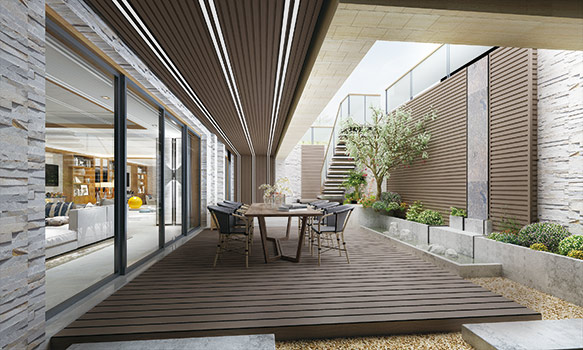
When you specify commercial composite decking, you are choosing boards for heavier use than backyard decking. You may use it for restaurants, hotels, resorts, schools, rooftops, pool areas, public walkways, and other large outdoor projects.
As a B2B buyer, you should not choose commercial decking only by appearance. You also need to check safety, load capacity, weather resistance, maintenance, installation speed, and long-term cost. In bulk orders, the wrong board can lead to higher repair costs, replacement work, and customer complaints.
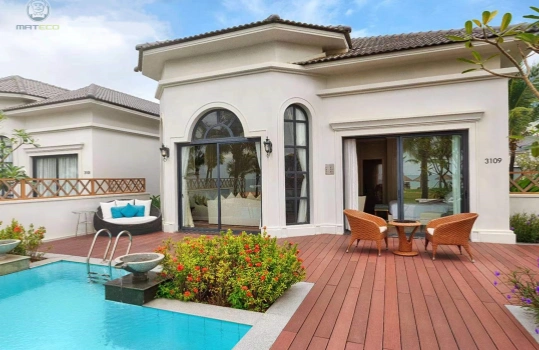
Table of Contents
What Is Commercial Composite Decking?
Commercial composite decking is outdoor decking made from wood-plastic composite, plastic lumber, or other polymer-based materials. It gives you a timber-like appearance while reducing many common timber problems, such as painting, staining, splinters, and frequent surface repair.
Commercial-grade decking is different from normal residential decking because you need to select it by traffic level, support spacing, project use, climate, safety rules, and maintenance needs. It is not enough to choose a board only because it looks good in a sample.
Common installation systems include clips, screws, joists, trims, starter clips, edge boards, and corner pieces. For example, MATECO's outdoor co-extrusion decking range includes decking profiles, nylon fixing clips, joist sets, and trim profiles. This means you should plan accessories together with the boards before shipment.
Where Can You Use Commercial Composite Decking?
You can use commercial composite decking in outdoor spaces where timber needs too much maintenance or where weather exposure is high.
1) Restaurant Patios and Outdoor Dining Areas
For restaurant patios, you need decking that can handle food stains, drink spills, chair movement, and frequent cleaning. A capped composite surface can make daily cleaning easier than timber, especially in busy outdoor dining areas.
You should choose a surface with enough grip, but it should not trap too much dirt. This helps you keep the restaurant area clean and ready for guests.
2) Hotel Terraces, Resorts, and Poolside Areas
For hotels and resorts, you need decking that looks consistent across large areas and is easy to maintain. For poolside areas, you should choose a surface that is comfortable for barefoot use and helps reduce slip risk.
You also need to consider moisture, cleaning chemicals, sun exposure, and drainage. Before bulk ordering, you should check color stability, surface texture, and project photos.
3) Rooftop Decks and Commercial Balconies
For rooftop decks and balconies, you need careful material selection. You should consider board weight, installation access, wind exposure, heat, ventilation, and drainage.
Lighter boards can help reduce handling pressure, but the full decking system must still be strong enough for the project. Before ordering, you should confirm the joist system, fixing method, expansion gaps, and water drainage.
4) Public Walkways, Parks, and Boardwalks
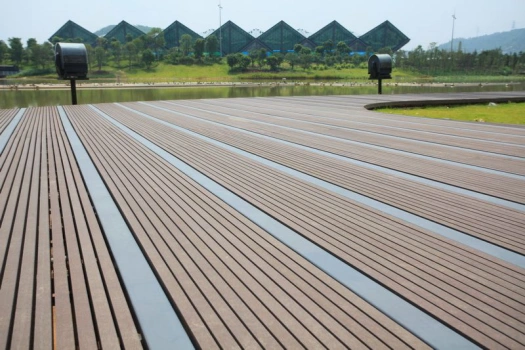
For public walkways, parks, and boardwalks, you need boards that can handle heavy foot traffic and long-term weather exposure. The boards must handle daily use, rain, mud, and regular cleaning.
For public-use areas, you should check span rating, support spacing, slip resistance, surface texture, fastener strength, and maintenance needs. A low-cost board may become expensive if you need early repair or replacement.
Why Do Commercial Projects Need Different Decking Requirements?
Commercial decking must meet stricter requirements than residential decking. It may look similar, but you face higher traffic levels, higher safety risk, and stronger weather exposure in commercial applications.
Foot Traffic and Load Requirements
For high-traffic decks, you should check span, joist spacing, deflection, load capacity, and project use. Too much bending can make the deck feel weak, noisy, or unsafe.
Joist spacing is especially important. A board used at 300 mm spacing may perform differently from the same board used at 400 mm or 450 mm spacing. For commercial projects, you should also review standards such as ASTM D7032 when required.
Slip Resistance in Wet Areas
For wet entrances, pool decks, ramps, waterfront spaces, restaurants, and rainy areas, you need careful surface selection.
Surface texture helps, but it is not enough. Drainage, board direction, slope, cleaning, and nearby conditions also affect slip risk. You should consider water, grease, mud, leaves, and algae before choosing a board.
Fire and Building Code Considerations
Commercial projects may require fire ratings, local code review, and product documents. Requirements vary by market and project type.
You should ask suppliers for valid test reports, safety documents, and installation guides instead of relying on general claims.
UV, Heat, and Color Stability
Commercial decks are often exposed to strong sunlight. UV and heat can affect color, surface condition, walking comfort, and board movement.
Capped or co-extruded surfaces can help reduce fading, staining, and wear. You should also consider color choice, ventilation, shade, and UV test data for high-sun markets.
Moisture, Mold, and Freeze-Thaw Exposure
Coastal areas, humid climates, poolside decks, shaded spaces, and cold regions all create moisture risks for your decking project.
Good drainage, ventilation, slope, and correct expansion gaps are important. In cold climates, you should also ask about freeze-thaw performance and installation details.
How to Choose the Right Commercial Composite Decking Board
The right commercial composite decking board depends on your project type, traffic level, climate, and installation structure.
Match the Board Structure to the Project Type
Different projects need different board profiles. For restaurants, you need boards that are easy to clean and can handle food stains, drink spills, and chair movement.
For public walkways, you may need solid boards or reinforced hollow boards with clear span data. For poolside areas, you need capped, textured boards with good moisture resistance. For rooftop decks, you may need lighter boards with good ventilation and drainage. For hotels and resorts, you often need stable color, clean edges, and hidden fasteners.
Check Joist Spacing and Span Rating
Joist spacing affects safety, walking feel, deflection, and long-term performance. If the spacing is too wide, the board may bend, feel soft, make noise, or fail early.
Before ordering, you should confirm the recommended joist spacing for normal areas, high-traffic areas, ramps, stairs, and diagonal installation.
Review Surface Texture and Cleaning Requirements
Commercial decks should be easy to clean without frequent sanding, painting, or sealing. You need a surface that balances grip, cleaning, and appearance.
A deep texture may trap dirt, while a smooth surface may become slippery when wet. You should ask for cleaning guidance before bulk ordering.
Confirm Expansion Gap and Drainage Design
Composite decking expands and contracts with temperature changes. You should confirm side gaps, end gaps, ventilation space, slope, and water drainage before installation.
This is especially important for rooftops, pool areas, rainy climates, and long board lengths.
Common Mistakes When Buying Commercial Composite Decking
Many decking problems start before installation. They happen when you choose the wrong board, miss key details, or do not confirm the full project requirement.
Choosing Only by Price per Square Meter
Price per square meter is important, but you should not use it as the only decision point. A low upfront price can create higher maintenance cost, more replacement work, and customer complaints.
For commercial projects, you should compare full project cost. This includes decking boards, accessories, installation labor, maintenance, cleaning, repair risk, warranty support, and replacement cost.
A cheaper board is not always cheaper after three to five years of use.
Using Residential Boards for Heavy Commercial Areas
A residential board may look similar to a commercial board, but it may not be suitable for public traffic or project requirements. The board may have a weaker core, thinner wall, lower span rating, or a surface made for light use.
This is a common mistake in restaurants, public walkways, and resort projects. You should tell the supplier the real use case before ordering. The supplier should know whether you will use the board for private patios, hotel terraces, pool decks, rooftops, or public paths.
Ignoring Local Climate
Climate has a major effect on decking performance. Hot, wet, coastal, cold, and high-UV markets need different board features.
In hot areas, you should pay attention to color and ventilation. In wet areas, you should focus on drainage and cleaning. In coastal areas, you should consider moisture and salt exposure. In cold areas, you should confirm freeze-thaw performance and expansion gaps.
You should not use one standard board for every market without checking climate conditions.
Not Checking Joist Spacing Before Ordering
Wrong joist spacing can cause excessive flexing, noise, or failure. This problem is expensive because it may only become clear after installation.
Before ordering, you should confirm the board span, joist spacing, and installation direction. You should also check whether the project needs closer spacing for heavy traffic, stair treads, ramps, or commercial furniture.
Not Planning Accessories and Wastage
Decking boards are only one part of the order. You need to calculate clips, screws, edge trims, starter clips, stair pieces, joists, end caps, and wastage before shipment.
If accessories are missing, the project may stop. If trims are not planned, the finished edge may look poor. If wastage is not included, you may need a second shipment, which increases cost and delay.
For container orders, you should ask the supplier to calculate boards, accessories, packing, and loading quantity together.
What Should You Ask a Commercial Composite Decking Supplier?
Before placing a bulk order, you should ask clear questions. This helps reduce project risk and makes the supplier's responsibility easier to confirm.
Ask the supplier:
What board profile do you recommend for my project type?
What is the recommended joist spacing?
Can the surface handle high UV exposure?
What is the expansion gap requirement?
What accessories are included?
Can you support private label packing?
What is the MOQ?
How many square meters fit in one container?
Do you have commercial project references?
What warranty applies to commercial use?
These questions help you compare suppliers not only by price, but also by technical support, project experience, packing ability, and after-sales service.
If you are sourcing for wholesale, distribution, or commercial outdoor projects, you can also review MATECO's exterior WPC decking supplier page to check available decking profiles, accessories, color options, and sample support.
Is Commercial Composite Decking Worth It?
Yes, commercial composite decking is worth it when you need lower maintenance, better weather resistance, predictable appearance, and long-term cost control.
It may not be the cheapest material at the time of purchase. Timber may look cheaper at first. Some low-grade boards may also have a lower price per square meter. But you need to think about the full service life of the deck.
Composite decking can reduce painting, staining, sanding, splinter repair, and frequent replacement. This is valuable for restaurants, hotels, resorts, rooftops, public walkways, and other spaces where downtime is expensive.
For you as a B2B buyer, the main value is not only the material itself. It is the ability to supply a stable product, reduce maintenance work, support large projects, and lower the risk of complaints.
Conclusion
You should choose the best commercial composite decking by project use, traffic level, climate, safety needs, installation method, and supplier support-not only by price or appearance.
Before bulk ordering, you should check the board structure, surface type, joist spacing, slip resistance, expansion gaps, drainage, accessories, test reports, and warranty terms.
A good decking choice can reduce installation problems, maintenance work, and long-term project risk.