WPC exterior wall cladding can remain in service for many years, but there is no single lifespan that applies to every WPC product.
Its actual service life depends on the polymer system, wood content, surface protection, UV exposure, temperature changes, installation method, drainage, and manufacturing quality.
For distributors and importers, the more useful question is not only "How many years does WPC last?" but also what product specifications and test data support that expected service life.
Key Takeaways
WPC exterior cladding can provide long-term outdoor service when the product is designed for exterior use.
Lifespan varies according to formulation, UV protection, climate, installation, and maintenance.
Surface fading does not always mean structural failure.
Thermal expansion and incorrect fixing can shorten the service life of exterior WPC panels.
Test reports and warranty conditions are more useful than a general lifespan claim.
Table of Contents
How Long Does WPC Cladding Typically Last?
Many WPC suppliers refer to service lives of around 20 years or more, but this should not be treated as a universal figure for every WPC wall panel.
A sheltered exterior wall in a mild climate and a facade exposed to strong UV, high temperatures, heavy rain, or freezing conditions experience very different aging conditions.
For this reason, expected lifespan should be evaluated together with:
Product formulation
Outdoor-grade surface protection
UV resistance
Water absorption
Dimensional stability
Installation method
Local climate
The supplier's warranty and relevant test reports provide a better reference than lifespan claims alone.
What Affects the Lifespan of WPC Cladding?
Several factors determine how WPC exterior wall panels perform over time.
Polymer and Formulation
WPC is not one fixed material.
PVC-based WPC and PE-based WPC use different polymer systems. Wood content, mineral filler, stabilizers, pigments, recycled material, and other additives can also affect outdoor performance.
Two WPC panels with similar appearance can therefore have different long-term behavior.
Surface Protection
Outdoor WPC products can use different surface systems.
Uncapped WPC relies mainly on the core formulation for weather resistance, while co-extruded or capped products add a protective surface layer.
A suitable surface layer can help reduce UV exposure, staining, moisture penetration, and surface aging.
Climate
High temperatures, strong sunlight, repeated rainfall, freezing conditions, and large temperature differences can all increase stress on exterior materials.
A product suitable for one market may therefore need different specifications or installation requirements in another market.
Does WPC Fade Over Time?
Some color change can occur in WPC products exposed to outdoor conditions.
The degree of fading depends on pigments, polymer type, UV stabilizers, surface technology, and exposure conditions.
Uncapped WPC may show more visible surface aging than products with a protective co-extruded layer.
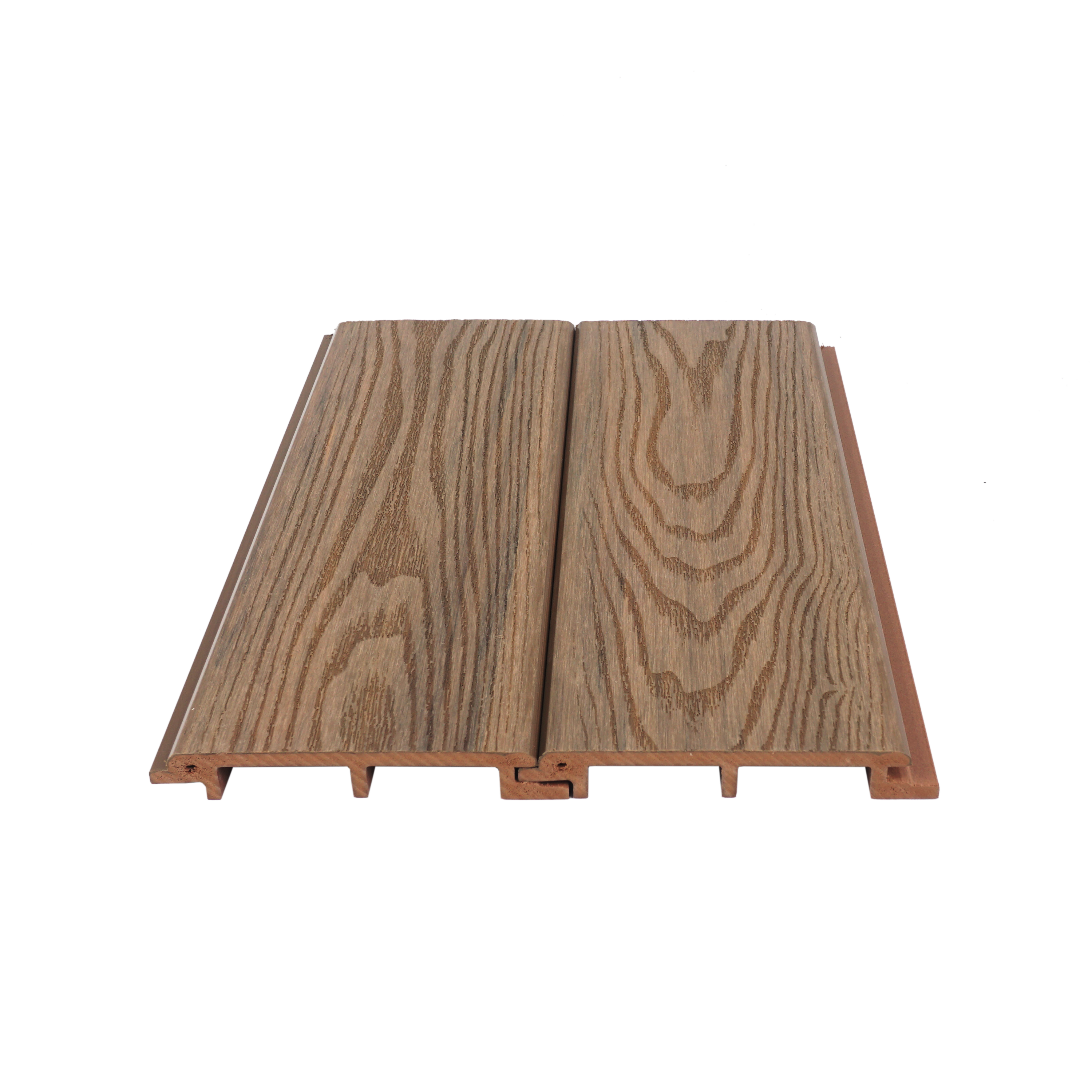
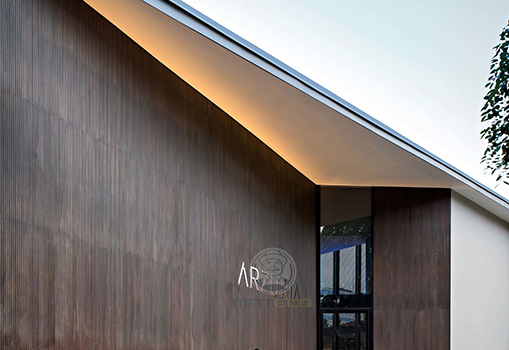
MATECO WPC exterior wall cladding uses a PVC-based WPC core with an ASA co-extruded surface designed for outdoor exposure.
However, buyers should still evaluate actual UV or weathering test results for the specific product rather than relying only on a general "no fading" claim.
Does WPC Rot?
WPC is generally much more resistant to rot than untreated natural wood because the polymer reduces direct moisture contact with the wood component.
However, moisture performance still varies according to formulation, density, wood content, and product structure.
Low water absorption can help reduce the risk of swelling and biological degradation, but drainage and installation remain important for exterior walls.
Standing water should not be allowed to remain behind the cladding system for long periods.
Can WPC Crack or Deform Over Time?
WPC can develop deformation or local damage if the product structure or installation conditions are unsuitable.
Important factors include:
Wall thickness
Internal rib design
Panel length
Support spacing
Fixing method
Temperature range
Expansion allowance
A long WPC profile that cannot move as temperature changes may place stress on joints, fixing points, or the panel itself.
For this reason, long-term performance depends on both material quality and correct installation.
Does Thermal Expansion Affect WPC Lifespan?
Yes. Thermal movement is an important consideration for exterior WPC.
WPC expands and contracts as temperature changes. If the installation does not provide enough movement allowance, panels may experience joint compression, buckling, fixing-point stress, or visible deformation.
The amount of movement depends on the material formulation, panel length, temperature difference, and fixing system.
Installation instructions should therefore specify suitable gaps and fixing methods for the intended climate.
How Does UV Protection Affect WPC Lifespan?
UV exposure mainly affects the surface of outdoor WPC.
Long-term sunlight can contribute to color change, surface oxidation, and gradual changes in material properties.
A suitable UV-resistant formulation or co-extruded surface can reduce direct exposure of the WPC core.
For distributors supplying outdoor cladding, UV or accelerated weathering test data is particularly useful when comparing products intended for high-sunlight markets.
What Should Bulk Buyers Check?
Before ordering exterior WPC wall cladding in bulk, wholesalers, distributors, and importers should check:
Outdoor-grade product specification
Water absorption test
UV or weathering test
Dimensional stability
Surface protection system
Panel structure and wall thickness
Installation gap requirements
Warranty conditions
Batch and color consistency
These factors provide a more reliable basis for evaluating long-term performance than price or appearance alone.
Conclusion
WPC exterior wall cladding can provide many years of outdoor service, but its lifespan depends on much more than the term "WPC."
Formulation, surface protection, UV exposure, water absorption, thermal movement, climate, and installation all affect long-term performance.
For bulk buyers, the best way to evaluate WPC lifespan is to compare product-specific test data, installation requirements, warranty conditions, and manufacturing consistency rather than relying on one general lifespan figure.